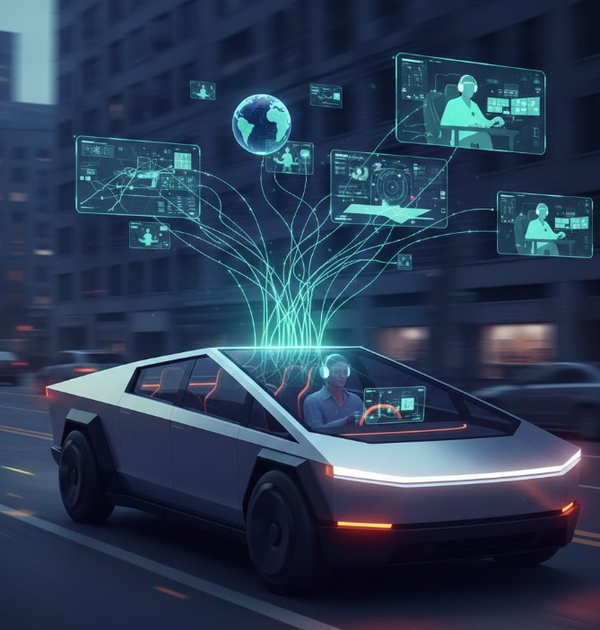
Your Car Is About to Become a Surveillance Device: Congress Just Made Sure of It


When "Safety" Becomes the Excuse for Total Vehicle Surveillance
The Vote That Changes Everything About Your Car
On January 22, 2026, Congress quietly ensured that every new car sold in America will soon watch you, judge you, and have the power to stop you.
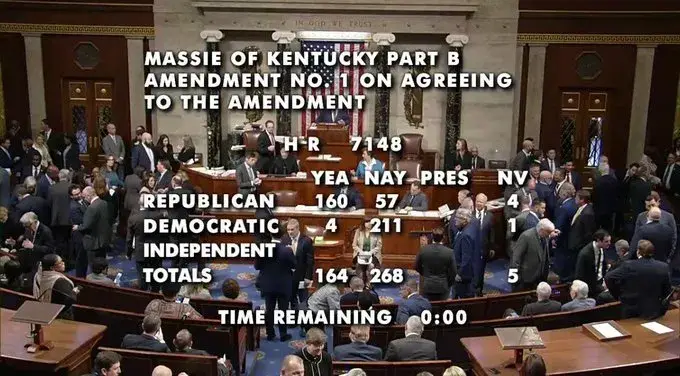
By a vote of 268-164, the House rejected an amendment that would have defunded the federal "kill switch" mandate—a requirement buried in the 2021 Infrastructure Investment and Jobs Act that forces automakers to install technology capable of passively monitoring your behavior and disabling your vehicle if it decides you're impaired.
Rep. Thomas Massie (R-KY), who introduced the defunding amendment, put it bluntly: "The looming Orwellian automobile kill switch deadline threatens civil liberties. When your car shuts down because it doesn't approve of your driving, how will you appeal your roadside conviction?"
He's not being hyperbolic. Let's talk about what's actually in this law.
 My Privacy Blog
What the Law Actually Says
Section 24220 of the Infrastructure Investment and Jobs Act contains chillingly specific language:
"Advanced drunk and impaired driving prevention technology must be standard equipment in all new passenger motor vehicles."
The law defines this technology as a system that can:
- "Passively monitor the performance of a driver"
- "Passively and accurately detect whether the blood alcohol concentration of a driver" exceeds legal limits
- "Prevent or limit motor vehicle operation" if impairment is detected
Read that again. Passively monitor. That means always-on surveillance. No breathalyzer you choose to use. No ignition interlock for convicted offenders. This is continuous, mandatory monitoring of every driver in every new vehicle sold in America.
The Surveillance Tech Coming to Your Dashboard
NHTSA hasn't finalized the specific technology requirements, but the systems being developed include:
In-Cabin Cameras
Always-on cameras pointed at your face, tracking:
- Eye movement and gaze direction
- Pupil dilation
- Facial expressions
- Head position and movement
- Signs of drowsiness or distraction
Infrared Sensors
Monitoring your body for:
- Skin flush patterns associated with intoxication
- Body temperature variations
- Physiological stress indicators
Breath Sensors
Passive air quality monitoring that:
- Samples cabin air continuously
- Detects alcohol molecules
- May detect other substances
Touch-Based BAC Sensors
Built into steering wheels or start buttons:
- Measures blood alcohol through skin contact
- Requires physical contact with monitored surfaces
- Creates biometric data with every drive
Driving Pattern Analysis
Algorithmic monitoring of:
- Steering wheel movements
- Lane position maintenance
- Braking patterns
- Acceleration behavior
- Reaction times
Every trip you take will generate a surveillance data file.
 My Privacy Blog
"But It's Just for Drunk Driving!"
This is always how surveillance expands. It starts with something no one can argue against—who supports drunk driving?—and then the infrastructure gets repurposed.
The Scope Creep Problem
The law requires detection of "impairment," but doesn't limit this to alcohol. What else might trigger your car's judgment?
- Prescription medications that cause drowsiness
- Medical conditions like diabetes causing blood sugar fluctuations
- Emotional distress affecting driving patterns
- Fatigue from working long hours
- Age-related changes in reaction time
- Disability accommodations that alter standard driving patterns
The system doesn't know why you're driving differently. It just knows you are—and it has the power to stop you.
Mission Creep is Inevitable
Once the surveillance infrastructure exists, history shows it will be used for purposes beyond its original intent:
| Original Purpose | Expanded Use |
|---|---|
| Toll collection cameras | Speed enforcement, movement tracking |
| Cell phone location data | Warrantless law enforcement access |
| Smart home devices | Evidence in criminal investigations |
| License plate readers | Immigration enforcement, repossession |
| Social media platforms | Government surveillance programs |
Your car's impairment detection system will collect data. That data will be stored somewhere. And someone will want access to it.
 Compliance Hub
Who Gets Your Data?
The law is silent on critical data governance questions:
Insurance Companies
Will your insurer get access to your "impairment scores"? Can they raise your rates based on detected drowsiness? Deny claims because the car flagged unusual driving before an accident?
Progressive, State Farm, and others already offer "safe driver" discounts based on voluntary telematics. What happens when the monitoring is mandatory and the data is comprehensive?
Law Enforcement
Can police access your car's monitoring data with a warrant? Without one? In real-time during a traffic stop?
The Third-Party Doctrine—the legal principle that information shared with third parties loses Fourth Amendment protection—could mean your car's surveillance data is available to law enforcement without traditional warrant requirements.
Manufacturers and Tech Companies
GM was caught selling driver data to insurance companies in 2024. Tesla collects vast amounts of driving data. Every major automaker is building data monetization into their business models.
Your car's impairment monitoring creates valuable behavioral data. Who owns it? Who can sell it? Who can buy it?
Hackers and Data Brokers
Every database gets breached eventually. Your car's continuous behavioral monitoring creates a detailed profile of:
- Where you go and when
- Your physical and cognitive state during travel
- Patterns that reveal health conditions, work schedules, relationships
- Data that could be used for stalking, blackmail, or identity theft
Due Process? What Due Process?
Here's the fundamental civil liberties problem: this system acts as judge, jury, and executioner with no human oversight.
Traditional DUI Enforcement
- Officer observes driving behavior suggesting impairment
- Officer makes traffic stop based on probable cause
- Officer conducts field sobriety tests
- Driver can refuse (with consequences)
- Chemical testing with chain of custody
- Arrest and booking with rights read
- Court appearance with legal representation
- Prosecutor must prove case beyond reasonable doubt
- Judge or jury renders verdict
- Appeals process available
Algorithmic Vehicle Enforcement
- Car decides you're impaired
- Car disables itself
- You're stranded
That's it. No probable cause. No human judgment. No opportunity to explain that you swerved to avoid a pothole, that your medication makes your eyes droop, that you're crying because you just left a funeral.
The algorithm convicts you on the roadside with no appeal.
The False Positive Nightmare
Every detection system has false positives. What happens when the system gets it wrong?
Scenario: Medical Emergency
You're having a diabetic episode. Your driving becomes erratic. The car detects "impairment" and begins shutting down—while you desperately need to reach a hospital.
Scenario: Escape from Danger
You're fleeing a domestic violence situation. The stress affects your driving patterns. The car decides you're impaired and stops—leaving you stranded where your abuser can find you.
Scenario: Rural Highway
You're driving on a rural road at night. The lane markings are faded. The car interprets your drifting as impairment and disables itself—miles from help, with no cell service.
Scenario: Highway Speed
You're traveling at 70 mph when the system detects "impairment." How does a car safely disable itself at highway speed? The law doesn't say.
 Compliance Hub
What Government Officials Are Saying
Florida Governor Ron DeSantis:
"The idea that the federal government would require auto manufacturers to equip cars with a 'kill switch' that can be controlled by the government is something you'd expect in communist China, not the United States of America."
Rep. Harriet Hageman (R-WY):
"This is a massive and likely unconstitutional rule and an invasion of privacy on a greater scale than we are used to seeing from our government."
Rep. Keith Self (R-TX):
"Unbelievably disturbing. 57 House Republicans just joined almost all the Democrats to ensure the government can shut off your car whenever it wants."
The Bipartisan Failure
This wasn't a party-line vote. 57 Republicans joined 211 Democrats to preserve the kill switch mandate. Only 4 Democrats voted to defund it.
Privacy isn't a partisan issue—and neither is the surveillance state. Both parties have members happy to trade your freedom for the appearance of safety.
The representatives who voted to keep the government's hand on your ignition made a choice. They chose surveillance over liberty, algorithmic control over human judgment, and "safety" theater over actual freedom.
What You Can Do
Immediate Actions
- Contact your representative - Let them know how you feel about mandatory vehicle surveillance. Find how they voted at clerk.house.gov/Votes/202643
- Support the No Kill Switches in Cars Act - Separate legislation to repeal Section 24220 remains in committee. Contact your senators and representatives to support it.
- Comment on NHTSA rulemaking - When implementation rules are proposed, public comments matter. Watch for Federal Register notices.
- Consider your next vehicle purchase carefully - The mandate applies to vehicles manufactured after the implementation date. Used vehicles without this technology may become more valuable.
Longer-Term Advocacy
- Support privacy-focused organizations - EFF, ACLU, and others fighting surveillance overreach
- Advocate for data protection laws - Strong privacy legislation could limit how vehicle monitoring data is used
- Demand transparency - Push for clear disclosure of what data vehicles collect and who can access it
- Support right-to-repair - Vehicle owners should have the ability to understand and control their car's systems
The Bigger Picture
This isn't just about drunk driving or car technology. It's about the principle that should govern a free society: the government doesn't get to monitor your behavior continuously, judge you algorithmically, and punish you automatically.
Once we accept that cars can watch us and stop us based on AI judgment, we've accepted a principle that can extend anywhere:
- Smart homes that lock you in if they detect "dangerous" behavior
- Phones that disable themselves if you seem "agitated"
- Payment systems that freeze if your purchases seem "suspicious"
- Public spaces that restrict access based on behavioral scores
The car is just the beginning. The surveillance infrastructure being mandated today creates the template for algorithmic control of every aspect of life tomorrow.
The Bottom Line
By 2027, every new car sold in America will be required to:
- Watch you constantly through cameras, sensors, and behavioral monitoring
- Judge your fitness to drive using algorithms you can't examine or challenge
- Disable your vehicle if it decides you're impaired, with no human review
Congress had a chance to stop this. 268 members—211 Democrats and 57 Republicans—chose not to.
Your car is about to become a surveillance device with the power to strand you anywhere, anytime, based on its algorithmic judgment. And unless something changes, there's nothing you can do about it except drive an older car.
Welcome to the future of "safe" driving.
Have thoughts on vehicle surveillance? Contact us at myprivacy.blog
Related Reading:
- Full list of representatives and their votes
- Section 24220 - Infrastructure Investment and Jobs Act
- EFF on Connected Vehicle Privacy
- ACLU on Surveillance Technology
© 2026 MyPrivacy.Blog / CISO Marketplace. Your privacy matters.